


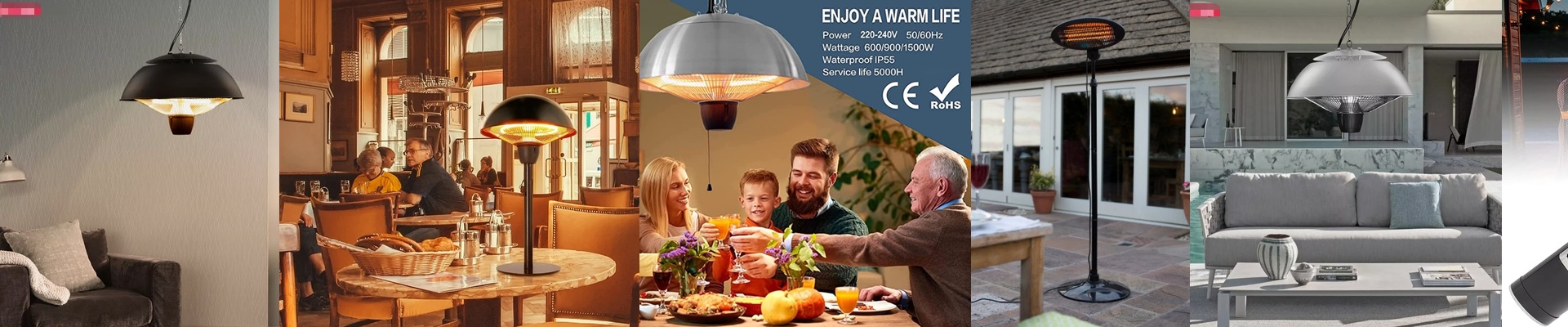


Stop Wasting Your Day on Heater Repairs
Let’s be honest: ceiling-mounted infrared heaters are usually “out of sight, out of mind.” They sit up there for years, doing their thing, until one day a heating element finally gives up. When that happens, the real cost isn’t the part itself. It’s the headache. You’re renting a lift, blocking off a section of the floor, and spending hours tearing apart a housing just to fix one small piece. It’s a nightmare. We decided that was stupid. So we changed how the units are built. The “Slide-and-Lock” Approach Most industrial heaters are basically welded shut or bolted into a permanent frame. If something breaks, you’re basically performing surgery on the ceiling. We went with a modular system instead. Think of it like a cartridge. You don’t have to rewire the whole unit while dangling from a lift. You just pull the dead module out, slide a new one in, and click it into place. What used to be a four-hour ordeal is now a fifteen-minute swap. You’re done before your coffee gets cold. The Technical Stuff (And the Trade-offs) These units are built for raw power. We use shortwave emitters so the heat hits the floor directly. You aren’t wasting energy trying to warm up all the air in the room; you’re warming the people and the equipment. But, there are a couple of things to keep in mind. First, these tubes are sensitive to power spikes. If your facility’s electricity is a bit jumpy, grab a voltage stabilizer. It’ll keep your tubes from burning out early. Also, keep an eye on your breakers. High-wattage modules get the heat going fast, but they pull a lot of juice. Just double-check your panel capacity before you decide to add more modules to the line. Dealing with the Real World Shop floors are dusty. There’s no way around it. That dust settles on the quartz tubes, creates hotspots, and eventually kills the filament. Since our design is modular, you can actually pull the elements down to clean them without shutting down your entire heating array. No soldering. No custom fitting. No “making it work” with a hacksaw. Just a quick disconnect and a click. Sure, the units have a slightly larger footprint than a welded box. But in exchange, your long-term maintenance costs plummet. When a tube hits its limit, you swap it and get back to work. Simple as that.