


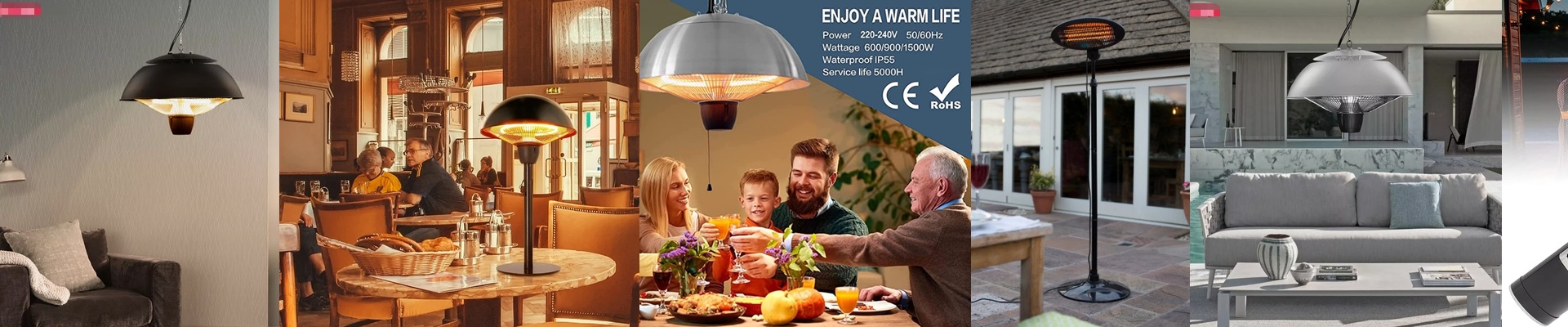

Picking the Right Infrared Heater for Your Bathroom
Here is a common mistake: thinking that the biggest heater is always the best. It’s not. If you just grab the highest wattage you can find, you’ll end up wasting money on your electric bill or turning your bathroom into a sauna in about three minutes. The trick is just matching the power to the size of your room. Getting the wattage right If you’re dealing with a tiny powder room (under 4m²), a 600W to 800W unit is plenty. It keeps the room cozy without feeling claustrophobic. For those mid-sized bathrooms—you know, the 5-10m² ones—you’ll want something in the 1200W to 1500W range. If your bathroom is huge (15m² or more), you’ve got two choices. You can go with a heavy-hitter 2000W unit, or just put up a couple of smaller heaters to make sure there aren’t any annoying cold spots. And a quick tip: don’t undersize. If the heater is too weak, it’ll just run non-stop and never actually get the room warm. But if it’s way too powerful, it’ll click on and off constantly, which wears out the parts way faster than it should. Why the “IP55” thing actually matters Bathrooms are brutal on electronics. Between the steam from the shower and the occasional splash, it’s a moisture trap. That’s why we stick to IP55-rated gear. It means the housing is sealed up tight against dust and water sprays. We use special gaskets and coatings so the steam doesn’t eat away at the wiring inside. Please, don’t try to save a few bucks with a standard IP20 heater. They aren’t built for this—they’ll either short out or just rust away. Speed vs. Staying Power Here is the interesting part about shortwave infrared: it’s instant. You flip the switch, and you feel the heat on your skin immediately. It doesn’t bother heating the air; it heats you. It’s efficient, but there’s a catch. The second the power goes off, the warmth vanishes. If you’re looking for that lingering, cozy heat that stays in the room, you might want a unit with more thermal mass. One last thing before you start drilling holes: a 2000W unit pulls a lot of juice. Double-check your circuit breakers and your wiring gauge. You want to make sure your home can handle the load before you flip the switch.