

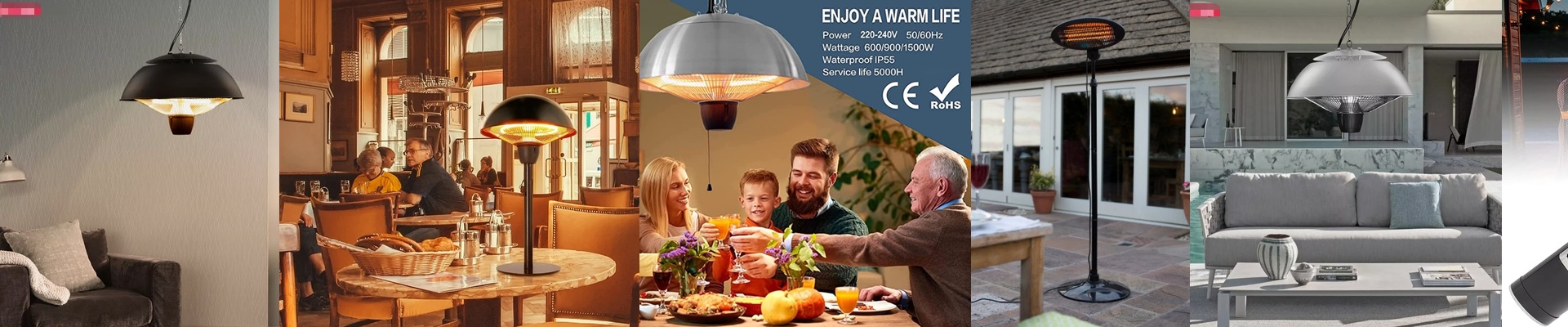


Why Your Bathroom Heater Needs Explosion-Proof Quartz
If you’ve ever put an infrared lamp in a bathroom or an outdoor shower, you know the risks. You’re fighting a constant battle against moisture and sudden temperature swings. Here’s the problem: a standard quartz tube is fragile. If a single drop of cold water hits a surface that’s glowing at 600°C, the glass doesn’t just crack. It shatters. Instantly. That’s why we use explosion-proof quartz. It’s basically insurance against a disaster. How it actually works When people say “explosion-proof,” they don’t mean it’s a bomb. They mean it can handle the shock. We use special coatings and reinforced glass that don’t freak out when the temperature drops in a split second. Instead of contracting unevenly and snapping, the material stays stable. This keeps the live electrical filaments safely inside the tube, rather than scattering them across a wet floor. It’s all in the seals A “waterproof” label on the box isn’t enough. The real magic happens where the quartz tube meets the end caps. We use high-temp silicone seals and alloys that don’t rust. Why? Because steam is sneaky. It finds every tiny gap. If steam leaks into the internal wiring, it eats away at the tungsten filament, and your expensive lamp burns out way sooner than it should. The honest trade-off Now, nothing is perfect. These lamps give you that immediate, cozy heat without having to wait for the air in the room to warm up. But those safety coatings do change the light slightly. You might lose about 5-10% of the raw heat compared to a clear tube you’d find in a lab. Honestly? You won’t even notice it in your bathroom. I’d take a tiny dip in heat over a shattered lamp any day. One last thing: please, wire these into a GFCI-protected circuit. Even with the best glass in the world, infrared elements pull a lot of power. You don’t want to be tripping your breakers every time you want to feel warm.