Out on the blow molding floor, heating drift and uneven preform temperature aren’t just slowing you down—they’re bleeding scrap. When the heating tunnel can’t hold a repeatable profile, you end up chasing rejects and short lamp life, while the press sits idle waiting for preforms.
What actually matters under the hood
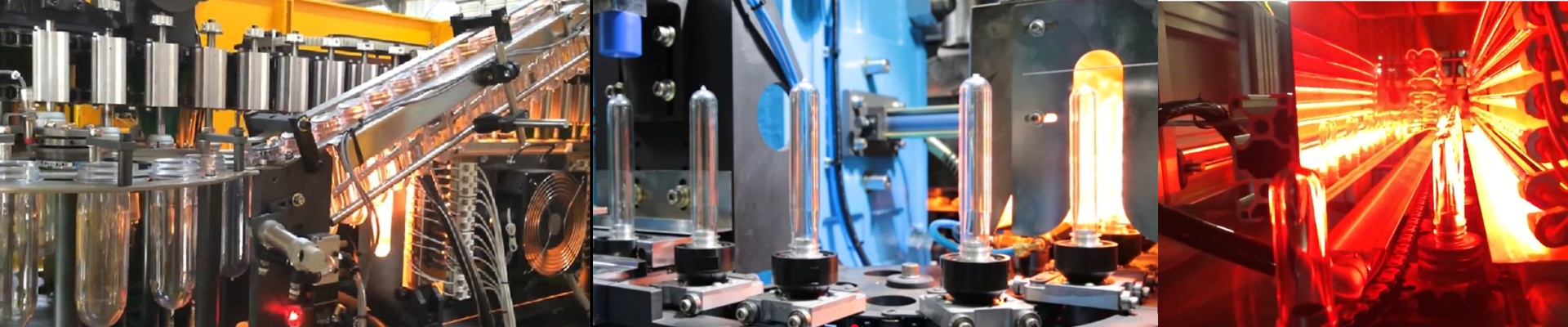
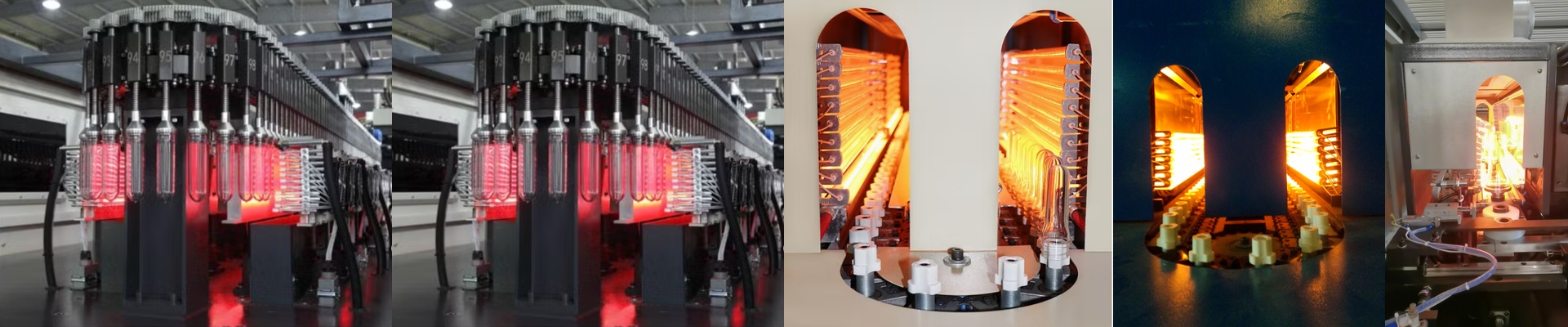
We build short-wave infrared radiators for PET preform heating, with quartz tubes and halogen lamp elements that deliver fast, focused energy. Power density is matched to preform wall thickness and the cycle time of your blow molder, tuned to heat the shoulder and body quickly without cooking the neck. The emitters run on standard voltages, use R7s connectors, and drop into the same mounting footprints as the original lamps on Sidel, Krones, SIPA, Husky, SACMI, and Nissei ASB machines. Temperature control stays tight, so the heating window holds steady—and you get consistent biaxial stretching in the mold.
Why this approach fits stretch blow molding
In stretch blow molding, timing is everything. Our infrared heating brings preforms up to the right temperature faster, so the heating tunnel can keep up with higher cavitation and shorter cycles. So what does that look like on the line? Fewer pinholes, consistent bottle weight, and less trim. Energy use drops, too, because the emitter heats on demand and cools quickly—no idle losses like you get with older systems. We’ve got units running 5,000+ hours with less than 5% output drop, which translates into fewer changeouts and less downtime.
The shop-floor details that make or break it
Installation is straightforward, but reflector alignment and clean quartz surfaces are non-negotiable. If reflectors are off, heat scatters and you get cold spots. Contamination on the tube cuts output fast. Expect a short warm-up ramp to hit set temperature, and keep spare mounts and connectors on hand for quick swaps. And before you order, verify your machine’s lamp spec—voltage, wattage, and length. A mismatch will underperform and shorten lamp life.