Getting That Perfect Golden Crust (Without the Guesswork)
Ever wonder why some loaves come out with that gorgeous, deep golden-brown crust while others stay pale and sad? It all comes down to a tiny window of temperature. If you miss it, you’re stuck with bread that’s either under-baked on top or burnt to a crisp on the bottom. Standard convection ovens are slow. They lag. That’s why we use short-wave infrared (IR) heaters to step in and do the heavy lifting.
Why Speed is Everything
Here’s the thing: traditional heaters have to warm up the air before the bread even feels it. IR is different. It skips the middleman and shoots energy straight into the surface of the dough. It’s almost instant. When your PLC kicks the heater on, the surface temperature spikes in seconds. This is the secret sauce. You hit that peak temperature needed for caramelization immediately, which means you get the color you want Without drying out the inside of the bread. You get a crust that snaps and an interior that stays fluffy.
The Nitty-Gritty on Hardware
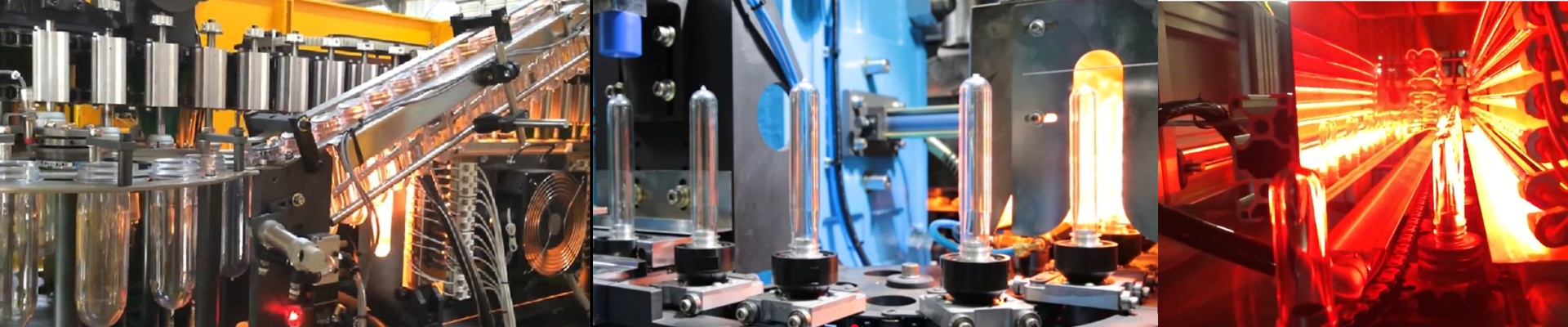
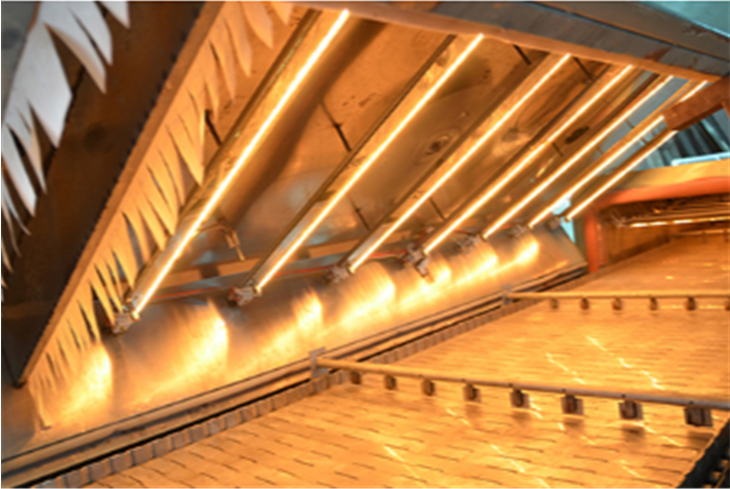
If your product is flying by on a conveyor, you need a serious punch of heat. We use high-wattage quartz glass tubes because they can handle the intense thermal stress without cracking. Short-wave emitters are the way to go here—they get the heat deep into the surface, fast. But you have to be smart about your power. A high-wattage setup is great for those thick-crust baguettes, but it puts a lot of pressure on your wiring. Just make sure your cabling and contactors are up to the task. Nobody wants a burnout in the middle of a rush because the wiring couldn’t handle the peak current.
A Few Things to Watch Out For
We make these heaters with standard industrial connectors, so if a tube finally gives out, you can just swap it and get back to work. No long downtimes, no headaches. But a heads-up: IR is directional. If your lamp is tilted just a few degrees the wrong way, you’ll end up with hot spots and uneven browning. It’s all about the angle. Also, keep an eye on the housing. If it gets too hot around the lamp, it’ll kill the bulb faster than it should. A little bit of heat management goes a long way in making your gear last.